
From living rooms to bathrooms — how to use jute rugs to bring warmth, texture, and that effortless cottage charm to every corner of your home
Jute rugs are one of those rare design pieces that somehow work everywhere. They’re affordable, they’re sustainable, and they bring a natural texture that makes any room feel warmer and more grounded — literally. The trick isn’t whether a jute rug will work in your space (it will), it’s how you style it so it doesn’t just sit there looking like a beige circle on the floor. Whether you’re going full modern cottage or just want to add a touch of natural warmth to a more contemporary room, here are 12 jute rug styling ideas that actually work — not just in theory, but in real homes with real furniture and real foot traffic.
1. Layered Under a Patterned Rug in the Living Room
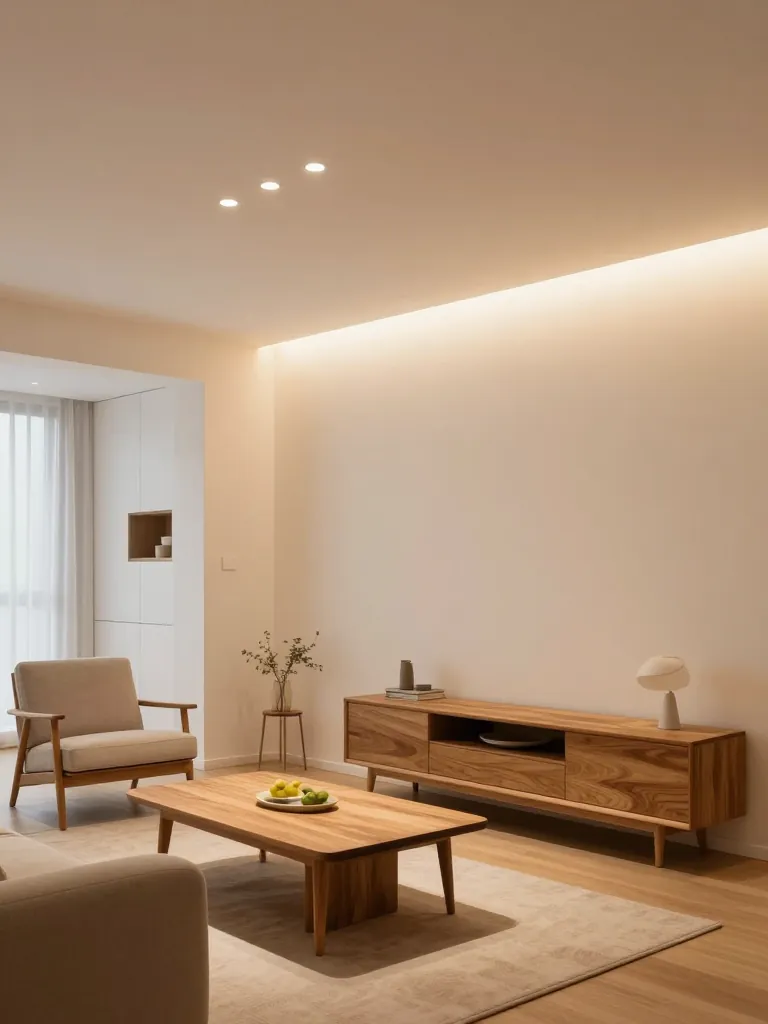
This is the move that interior designers have been doing for years, and it works because it solves two problems at once: the jute rug adds warmth and grounds the space, while the smaller patterned rug on top brings color and personality. Use a large jute rug as your base layer — 8×10 or 9×12 depending on your room — and layer a smaller vintage kilim, Persian, or even a modern geometric rug on top. The jute border that shows around the edges creates a natural frame that ties everything together. In a modern cottage living room, this combo keeps the space from feeling too sterile while still maintaining that clean, intentional look. The key is making sure the top rug is significantly smaller — you want at least 12-18 inches of jute showing on all sides, or the layering looks accidental instead of designed.
Size RuleBase jute rug should be 2-3 feet larger than the top rug on each side
Pro TipUse a rug pad between layers to prevent slipping and add extra cushion
2. Round Jute Rug Under a Breakfast Nook Table
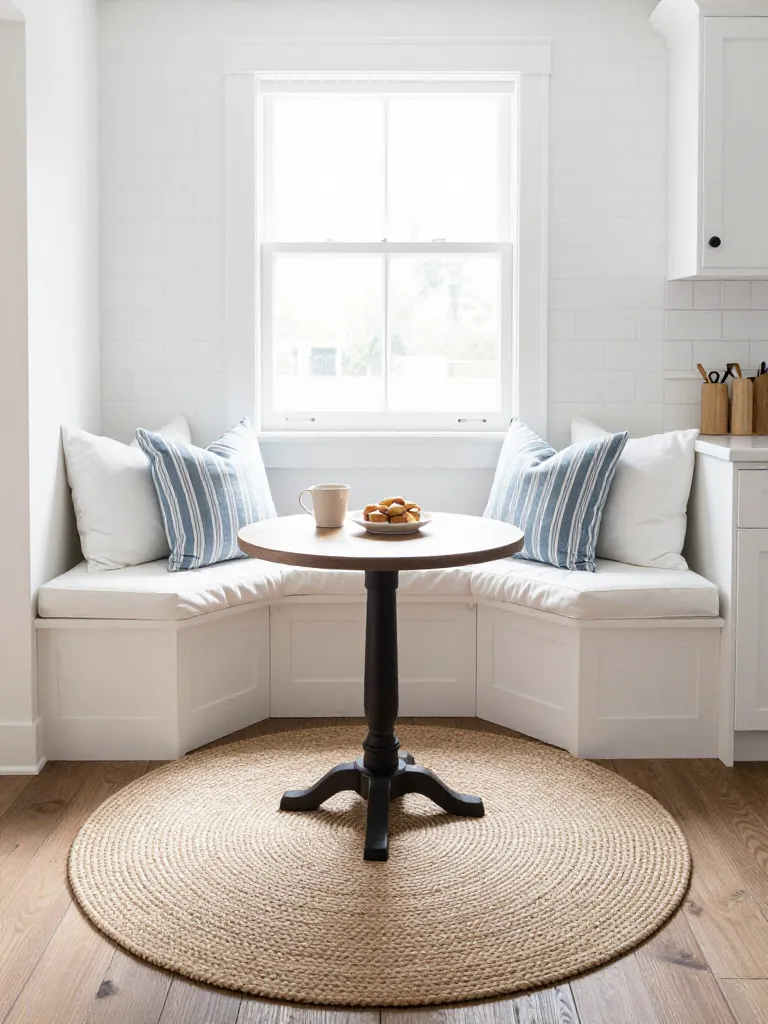
A round jute rug under a small breakfast nook table is one of the easiest ways to define a dining zone in an open kitchen. The round shape echoes the curve of a bistro or pedestal table and creates a visual boundary that says “this is where we eat our morning toast.” Jute is durable enough for a dining area — it handles crumbs well, and the natural fibers actually hide minor stains better than you’d expect. For a modern cottage look, keep the table simple (white-painted or natural wood) and add cushions to the bench seating. The rug grounds everything and makes the nook feel like its own little room, even if it’s technically just a corner of your kitchen.
Size GuideRug should extend 24 inches beyond the table on all sides for chairs to sit on
Care NoteVacuum regularly with suction only — no beater bar on jute
3. Jute Runner in the Entryway or Hallway
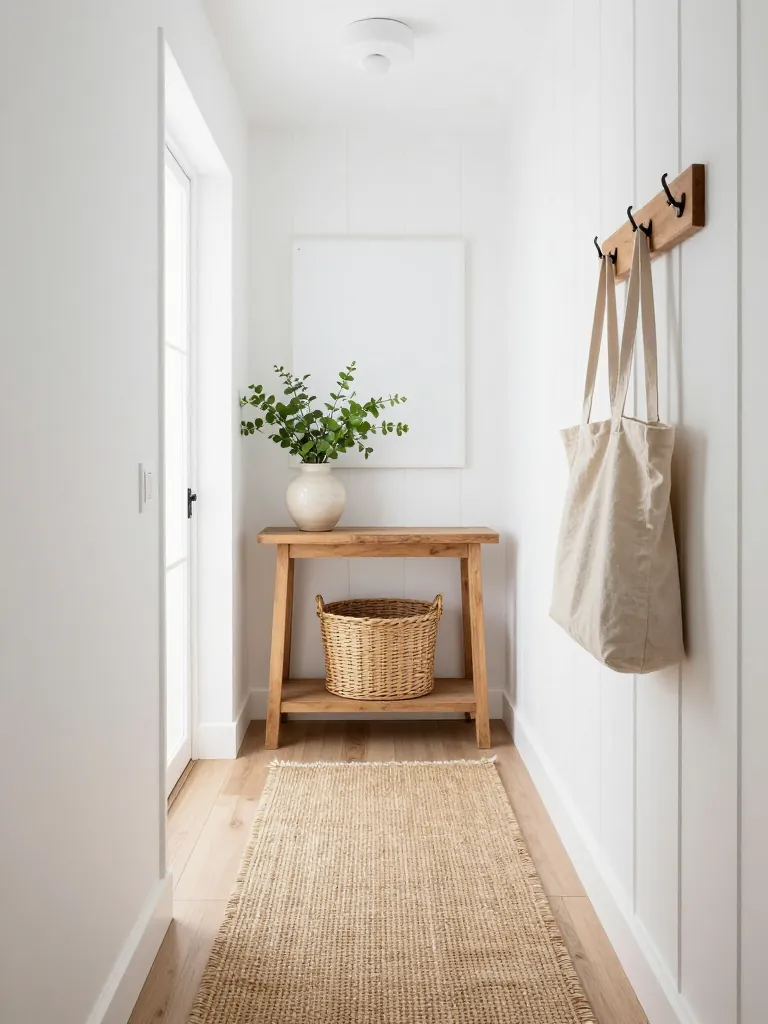
Entryways take a beating, and jute runners are one of the few natural fiber options that can actually handle it. The tight weave holds up to foot traffic, and the natural color hides dirt and debris that inevitably gets tracked in. A jute runner in an entryway or long hallway adds warmth to what’s often the most neglected space in the house. In a modern cottage entryway, pair it with a simple wooden console table, a woven basket for shoes, and some hooks for bags. The runner makes the space feel intentional instead of just a pass-through. Go for a runner that’s about 2-3 feet wide and long enough to cover the main walking path without bunching up at the ends.
Durability HackSpray with a natural fiber protector before placing in high-traffic areas
Width RuleLeave 4-6 inches of floor visible on each side — runner shouldn’t wall-to-wall
4. Large Jute Rug Anchoring a Neutral Bedroom
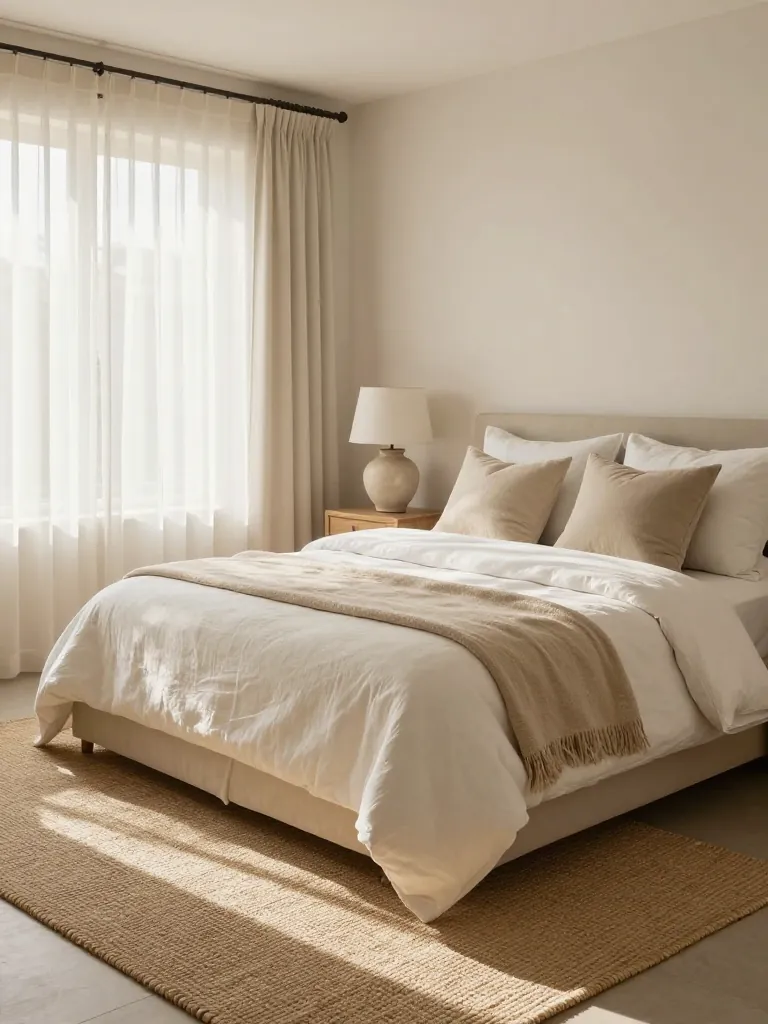
In the bedroom, a large jute rug under the bed is the foundation that makes everything else feel cohesive. It adds texture underfoot when you step out of bed in the morning — that warm, slightly rough feel is grounding in a way that plush carpet just isn’t. Position it so the rug extends at least 2-3 feet on each side and at the foot of the bed. In a neutral modern cottage bedroom with white linen bedding and light wood furniture, the jute rug is the piece that prevents the space from feeling too cold or too matchy-matchy. It’s the natural texture that makes a white room feel lived-in instead of sterile. If your bedroom floors are dark hardwood, the contrast is even better — the warm honey tones of jute pop beautifully against dark wood.
PlacementCenter under the bed with 2-3 feet on sides and 3-4 feet at the foot
Layer TipAdd a soft sheepskin or faux fur on top near the bedside for barefoot comfort
5. Jute Rug on a Covered Porch or Sunroom
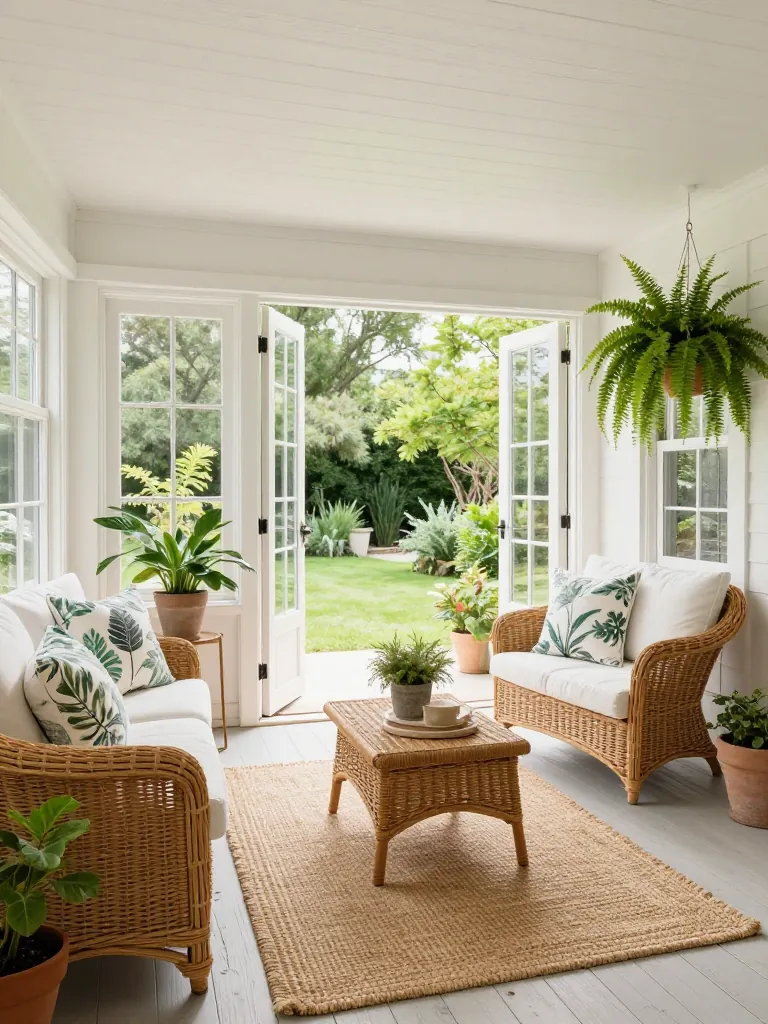
Jute rugs on covered porches and sunrooms are a match made in cottage heaven. They bring indoor warmth to outdoor-adjacent spaces and handle the casual, barefoot lifestyle of a sunroom beautifully. The key word here is “covered” — jute doesn’t love direct rain or standing water, but under a porch roof or in a three-season room, it’s perfectly happy. The natural fibers complement wicker furniture, rattan accents, and all the greenery that typically fills these spaces. In a modern cottage sunroom, a jute rug defines the seating area and makes it feel like a real room instead of an afterthought. Pair it with a wicker sofa, some botanical print pillows, and a few too many plants, and you’ve got the sunroom Pinterest dreams are made of.
Weather NoteMust be under cover — jute will mold and degrade if exposed to rain or standing water
PairingWicker, rattan, and natural wood furniture are jute’s best friends outdoors
6. Layered Jute and Cotton in a Home Office
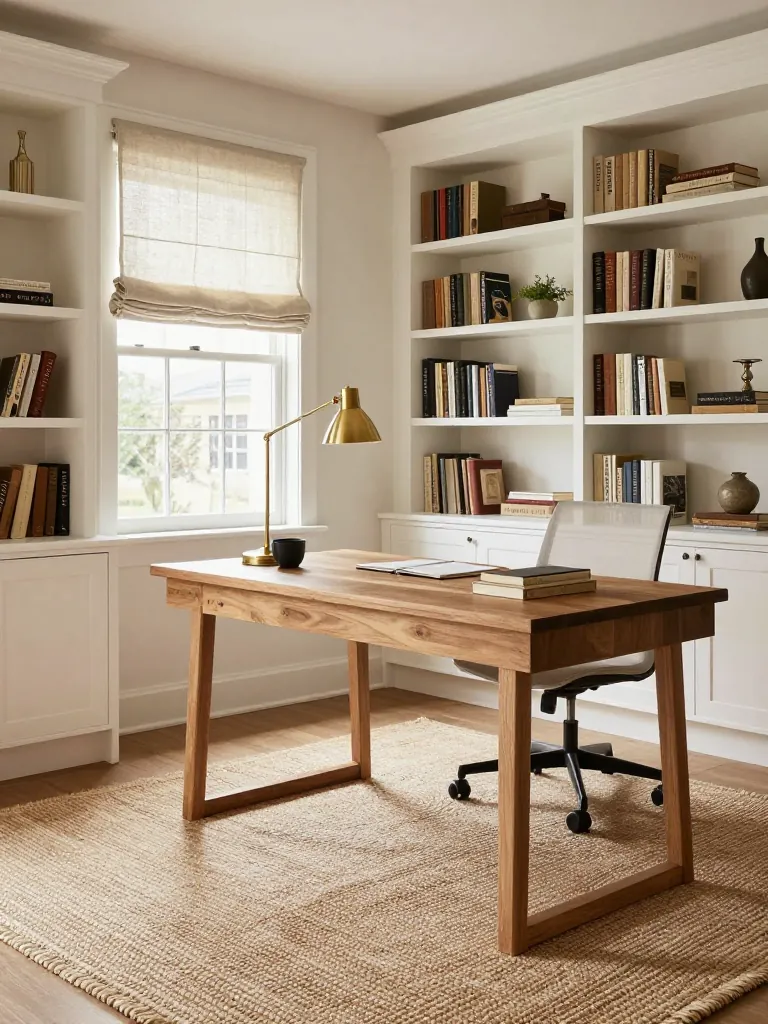
Home offices need grounding — both literally and visually. A jute rug under your desk and chair area adds warmth to a space that can easily feel cold and utilitarian. If you want something softer under your rolling chair, layer a flat-weave cotton rug on top of the jute. The combination gives you the natural texture and warmth of jute with the softer, smoother surface of cotton where your chair rolls. In a modern cottage office with white built-in shelving and a wooden desk, this layered approach keeps the room feeling warm and inviting without sacrificing the clean lines that make a workspace functional. The jute peeks out around the edges, adding visual interest and preventing the room from feeling too clinical.
Chair TipUse a clear chair mat on top if you have a rolling desk chair — protects the jute fibers
Color ComboNatural jute with cream or white cotton on top reads clean and cottage-appropriate
7. Round Jute Rug in a Nursery or Kids’ Room
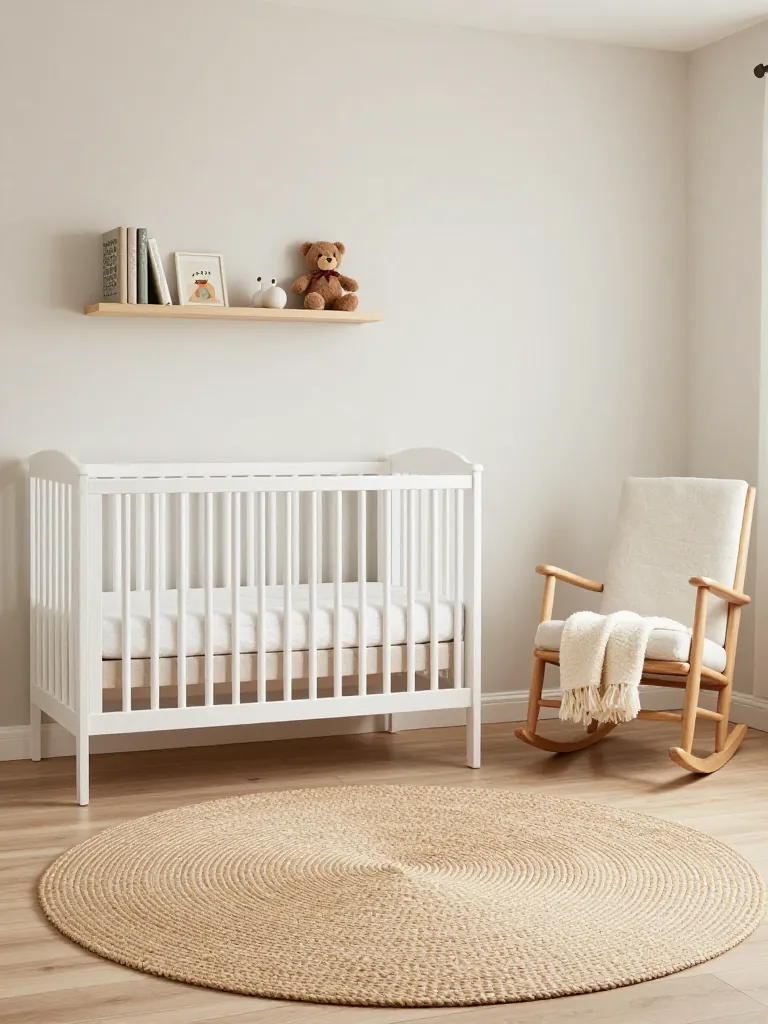
Nurseries and kids’ rooms are where jute rugs really shine — they’re durable, naturally hypoallergenic, and they add warmth without the off-gassing concerns of synthetic rugs. A round jute rug in the center of a nursery creates a soft play area that’s gentle on crawling knees while still looking like an intentional design choice. The natural texture is visually stimulating for babies without being overwhelming, and as kids grow, the rug holds up to toys, spills, and the general chaos of childhood better than you’d expect. In a modern cottage nursery with white furniture and soft pastel accents, the jute rug is the piece that adds warmth and prevents the room from feeling like a catalog spread.
Safety NoteAlways use a non-slip rug pad — jute can slide on hardwood floors
Why Jute?Naturally hypoallergenic and free of synthetic chemicals — safe for little ones
8. Jute Rug Under a Farmhouse Dining Table
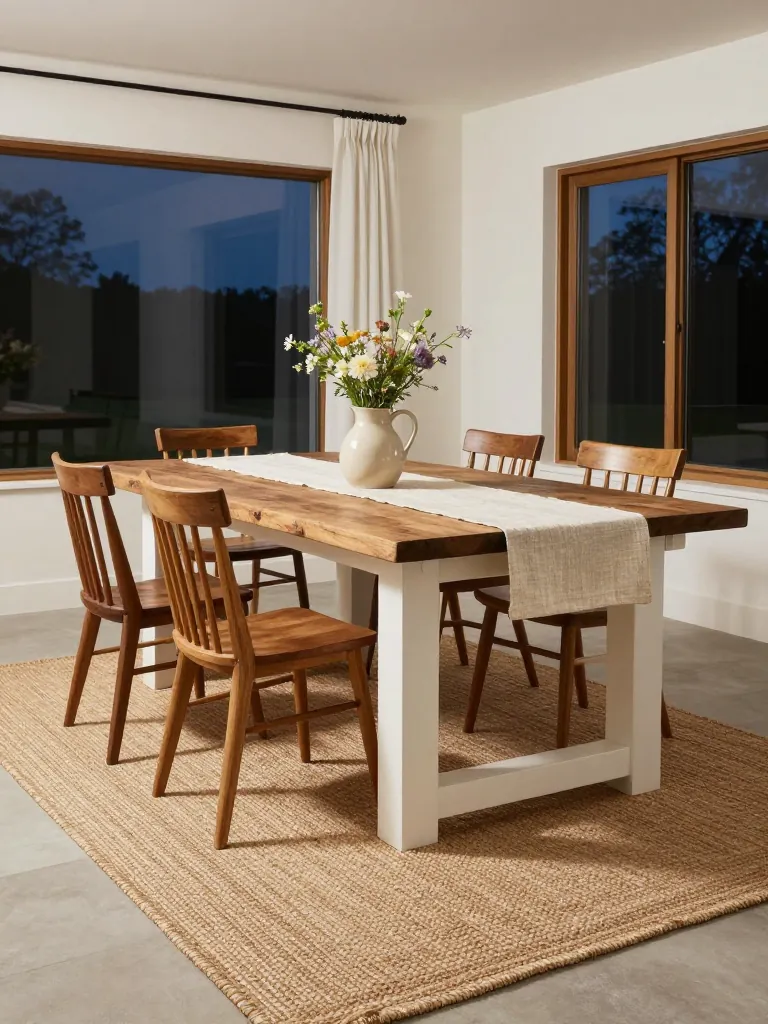
A jute rug under a farmhouse dining table is the quintessential modern cottage move, and it works because the textures complement each other perfectly. The rough, organic weave of jute pairs beautifully with the weathered wood of a farmhouse table — both materials have that imperfect, natural quality that defines cottage style. Size matters here: the rug needs to be large enough that all the chairs stay on it when pulled out, which usually means at least a 9×12 for a standard 6-8 person table. The jute will show wear over time in a dining room, but that’s part of the charm — a slightly worn jute rug under a well-used dining table tells the story of a room where people actually gather and eat together.
Size RuleRug should extend at least 24 inches beyond the table on all sides for pulled-out chairs
Spill StrategyBlot spills immediately — don’t rub. Jute darkens when wet but usually dries back to normal
9. Jute Rug as a Bathroom Accent
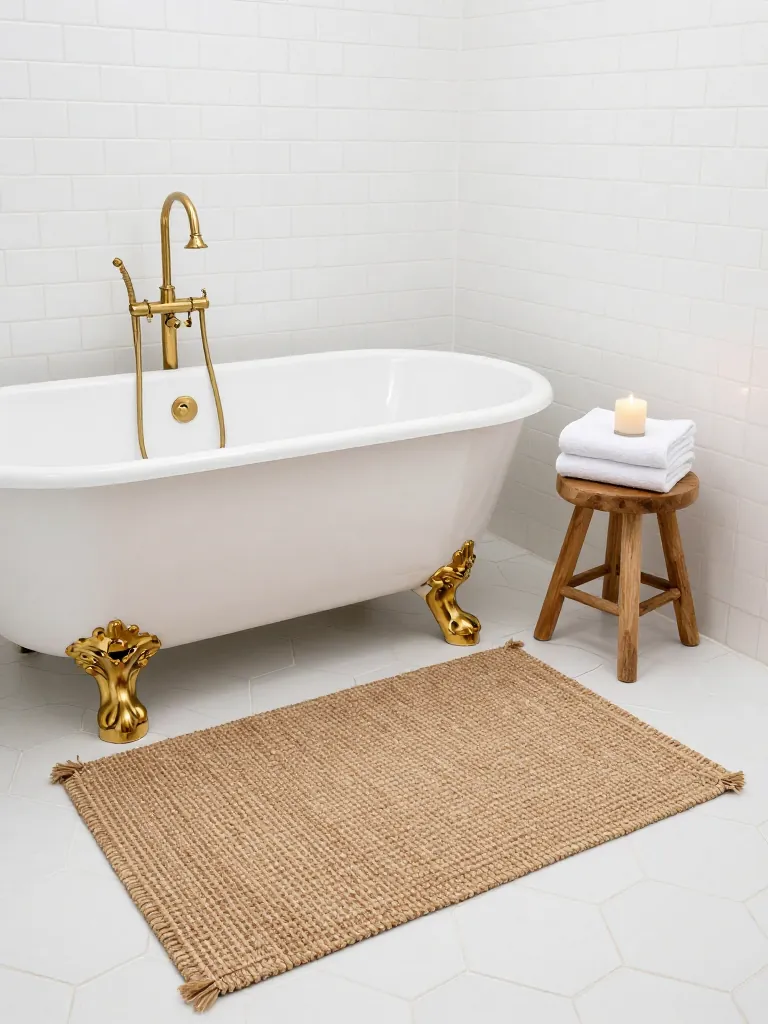
This one surprises people, but a jute rug as a bathroom accent absolutely works — with one caveat. It needs to be in a well-ventilated bathroom where it can dry between uses, so it’s not ideal for a windowless powder room that stays damp. But in a cottage bathroom with good airflow, a jute bath mat adds a spa-like warmth that standard cotton bath mats can’t match. The natural texture feels amazing under wet feet, and the neutral color works with everything from white subway tile to more colorful cottage bathrooms. Use it in front of a freestanding tub or as a soft landing spot near the vanity. It’s the kind of unexpected touch that makes a bathroom feel curated instead of just functional.
Moisture RuleHang to dry after use — don’t leave sitting on wet tile for extended periods
Alternate UsePlace in front of the vanity instead of the tub/shower for less water exposure
10. Double Jute Rugs Defining an Open-Concept Space
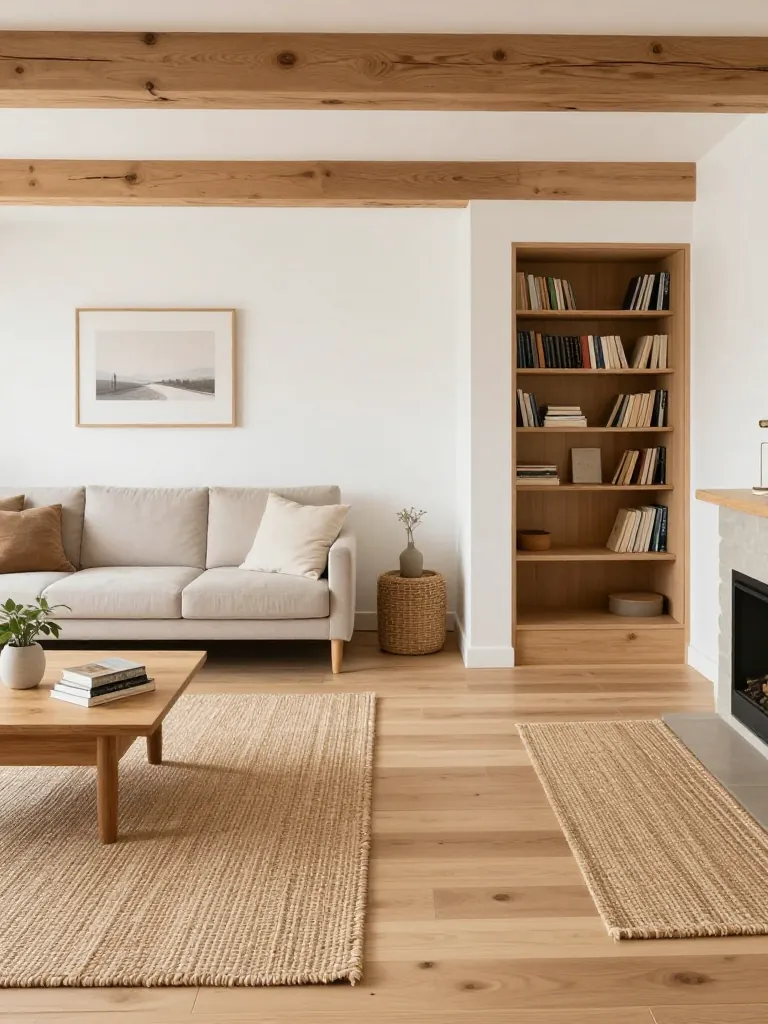
In open-concept homes where the living room flows into the dining area or kitchen, using two matching jute rugs is a clever way to define separate zones without walls or partitions. The matching rugs create visual continuity — they say “these are separate spaces” while also saying “they belong together.” Place one under the living room seating area and another under the dining table or in a reading nook. The consistent texture and color of the jute ties the zones together, while the physical separation creates distinct functional areas. In a modern cottage home with open floors, this approach maintains the airy, connected feel while preventing the space from looking like one giant undifferentiated room.
Matching RuleUse the same jute style and color — matching sizes aren’t necessary, matching texture is
Zone TrickEach rug should anchor its own furniture grouping independently
11. Jute Rug with a Painted Stencil Border in the Den
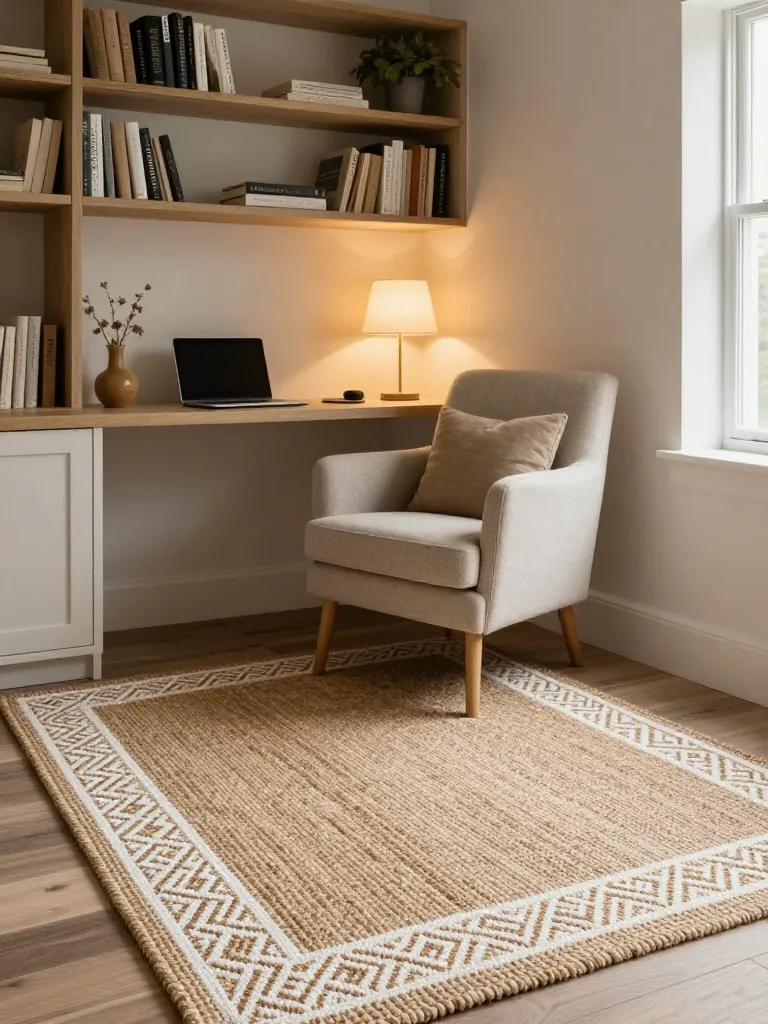
If you want to elevate a basic jute rug without spending more money, grab some fabric paint and a stencil. Adding a painted border — geometric patterns, simple stripes, or even a subtle botanical motif — transforms a standard jute rug into a custom piece that looks like it cost five times what you paid. The natural tan of jute is the perfect canvas for soft white, cream, or even muted sage paint. In a cottage den or reading room, a stenciled jute rug under a cozy armchair and reading lamp adds personality without overwhelming the space. It’s a DIY project that actually looks good, which is rarer than Pinterest would have you believe. The best part? If you get tired of the pattern, you can paint over it or flip the rug and start fresh.
Paint PickFabric paint or chalk paint works best — acrylic will crack and peel on jute
Pattern TipSimple geometric borders (Greek key, stripes, dots) look more polished than complex patterns
12. Jute and Wool Blend Rug for Maximum Cottage Comfort
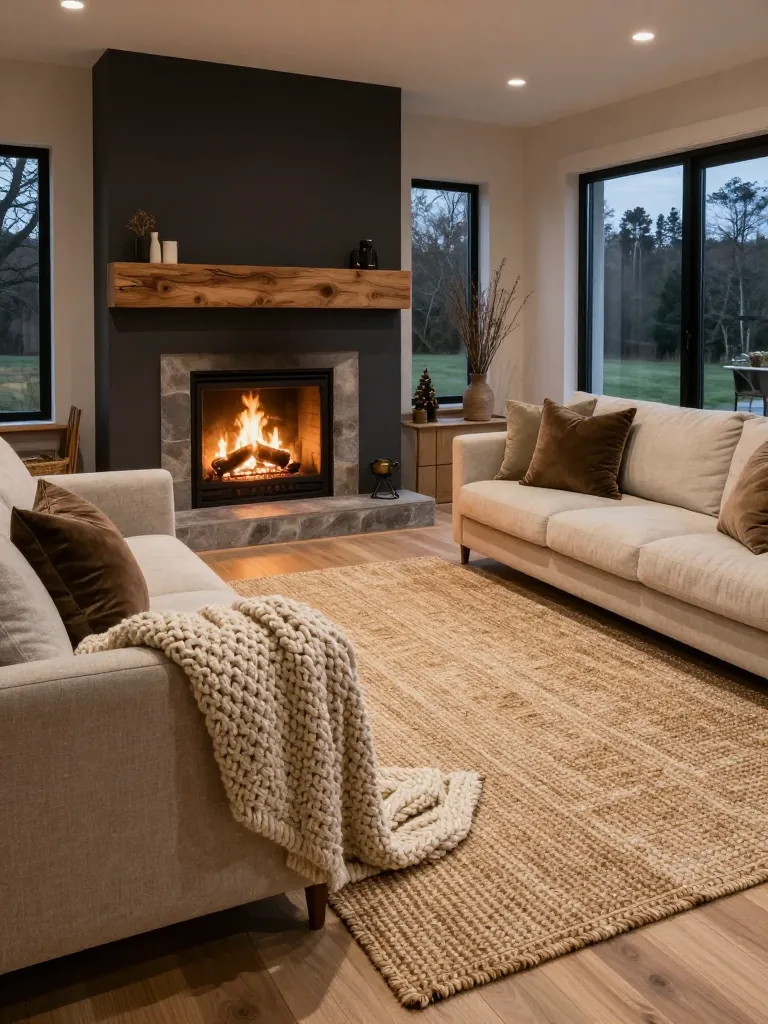
If pure jute feels too rough underfoot — and for some people, especially in bedrooms and living rooms where you’re sitting on the floor, it can be — a jute and wool blend gives you the best of both worlds. The jute provides the natural texture and visual warmth, while the wool adds softness, resilience, and that plush feel that makes you want to sit on the floor instead of the couch. These blend rugs are thicker than pure jute, which means they feel more substantial and luxurious. In a modern cottage living room with a deep sofa, a fireplace, and all the cozy layers, a jute-wool rug underfoot is the piece that makes the room feel truly comfortable — not just designed, but lived in and loved.
Blend RatioLook for 50/50 or 60/40 jute-wool — more wool means softer, more jute means more texture
Why It WorksWool adds bounce-back and softness that pure jute can’t match — worth the upgrade in comfort rooms
Jute Rug Essentials — What Every Homeowner Should Know